Between a Rock and a Hard Place
PATRICK LINNELL, CATTLEFAX | JULY 2026 (DATA & OPINIONS WERE CREATED BY CATTLEFAX FOR THE BEEF CHECKOFF FOR EDUCATION PURPOSES)

"Both supply and demand factors suggest a relatively stable, albeit uneasy, pattern in the current environment of tight production and high prices."
U.S. cattle supplies remain extremely tight, yet prices up and down the U.S. beef supply chain are showing signs of running into resistance. Consumer demand for beef remains historically strong, but may have hit a near-term peak. Meanwhile, record prices for beef have sent the signal to the domestic and global markets to deliver an adequate supply to meet consumer demand. As a result, both supply and demand factors suggest a relatively stable, albeit uneasy, pattern in the current environment of tight production and high prices.
On the supply side, the U.S. beef cow herd is showing signs of stabilization and a transition into a slow expansion phase. Placements of heifers into feedyards has slowed, indicating more females kept back on the ranch. Drought has remained a headwind to producers in many regions so far this year, but the El Niño weather pattern is expected to bring relief through the Central Plains into late summer and fall. Drought aside, multiple factors including labor availability, an aging producer demographic, and high operating costs will favor a slow pace of expansion. With only modest heifer retention so far, the cow-calf producer has worked to stabilize inventories by holding cows with the culling rate on pace to be a record-low 7.6% in 2026.
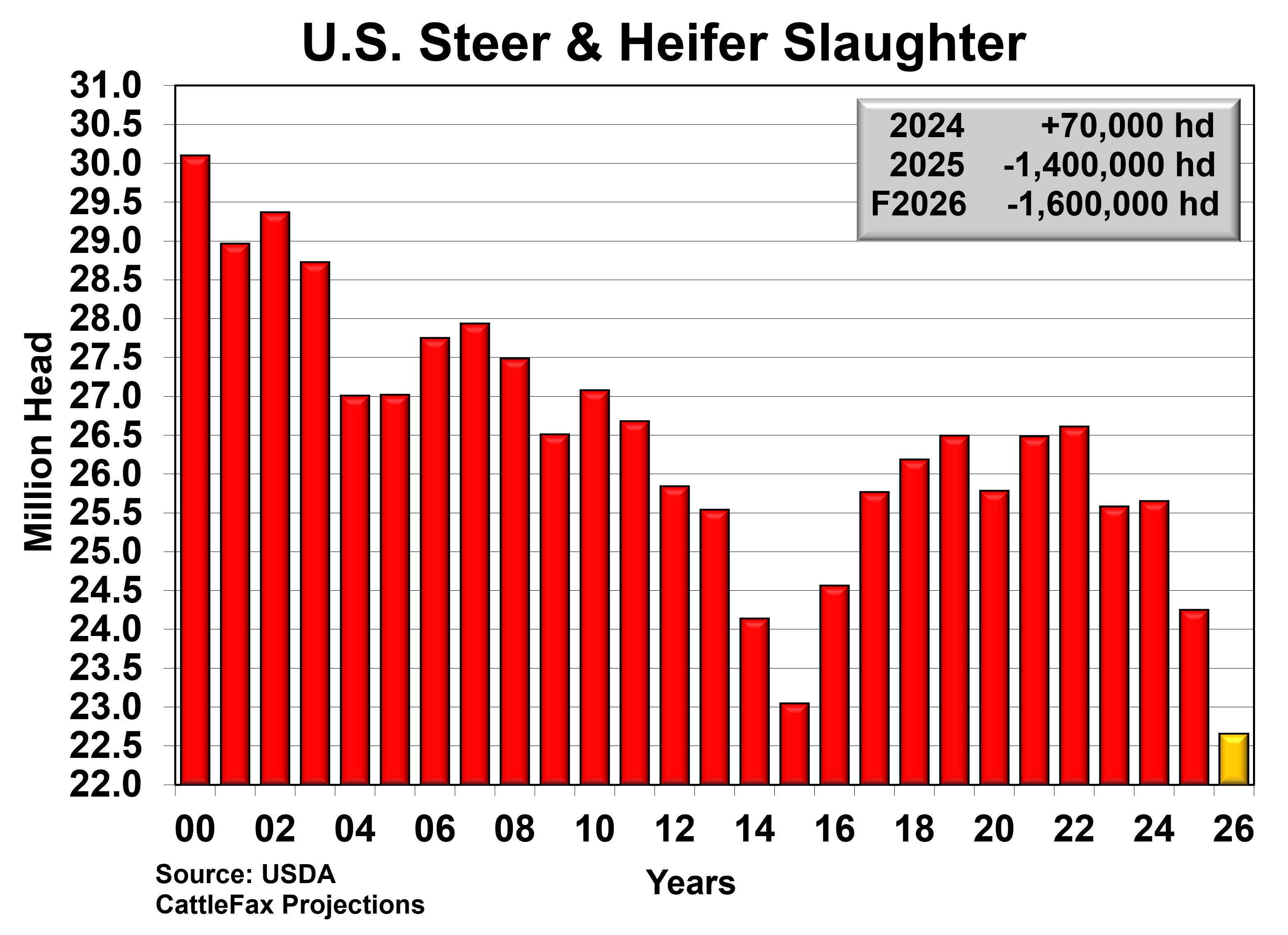
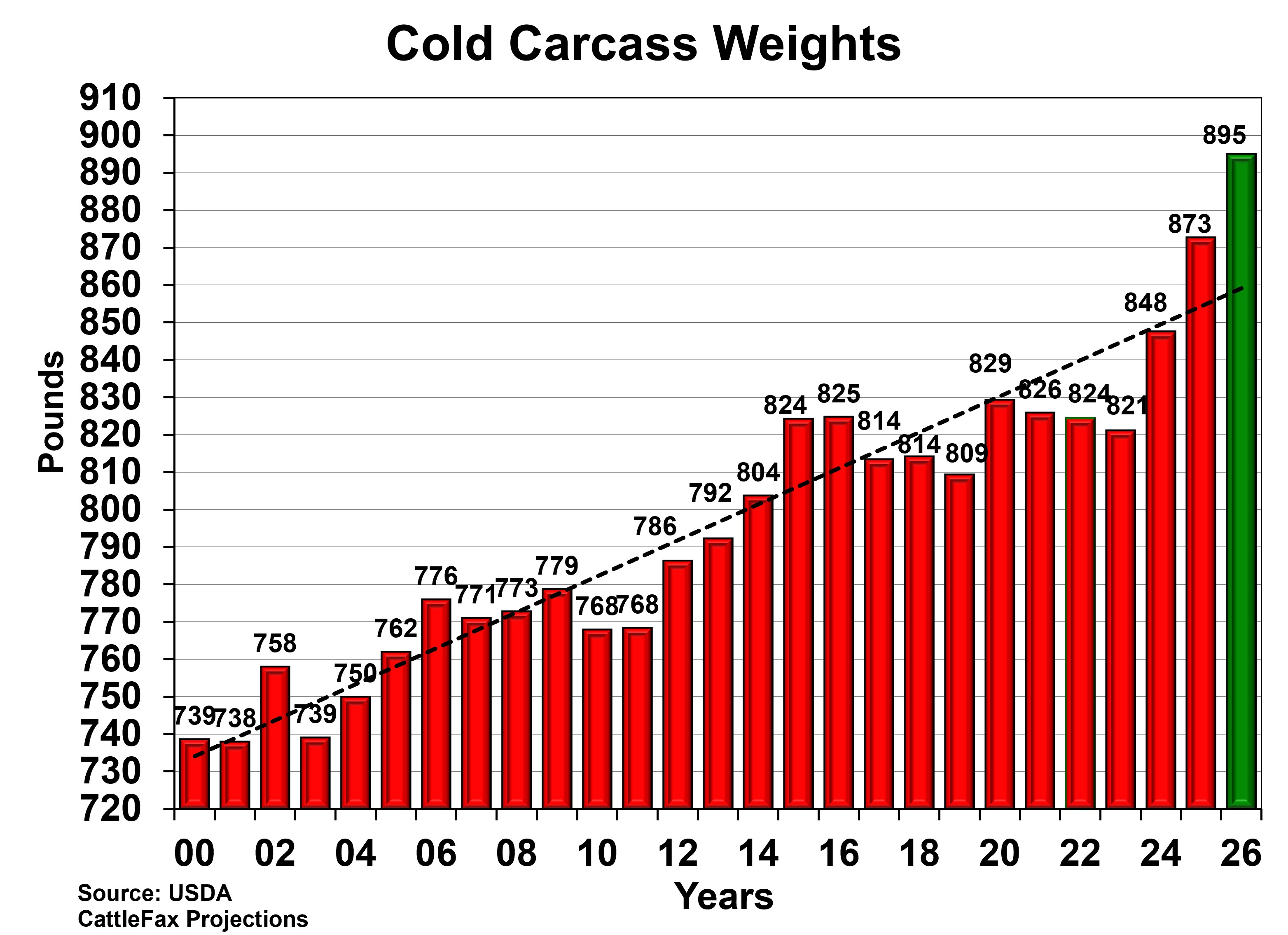
Despite the decline in numbers, the industry has managed to buffer the declines in beef production through increased carcass weights. Positive feeding margins for every pound of gain, coupled with elevated fed cattle breakevens, have sent strong signals to add weight and extend days on feed. While U.S. beef production will be down around 3.5% in 2026 and the smallest in 10 years, since 2023, the additional 74 lbs. in average carcass weights has added the equivalent of nearly 3.0 million head in cattle slaughter, substantially buffering the cyclical decline in beef production. Since the bulk of carcass weight gain has been in the fed cattle supply, non-fed beef production has seen little relief from tight cow slaughter levels.
The rapid shift in quality grade has been clearly evident in the boxed beef spreads, narrowing the Prime premium and driving an inverted spot Choice-Select spread at times. Rather than a sign of deteriorating demand for quality, this appears to be entirely due to the shift in supply dynamics as academic measurements of Prime demand remain strong.
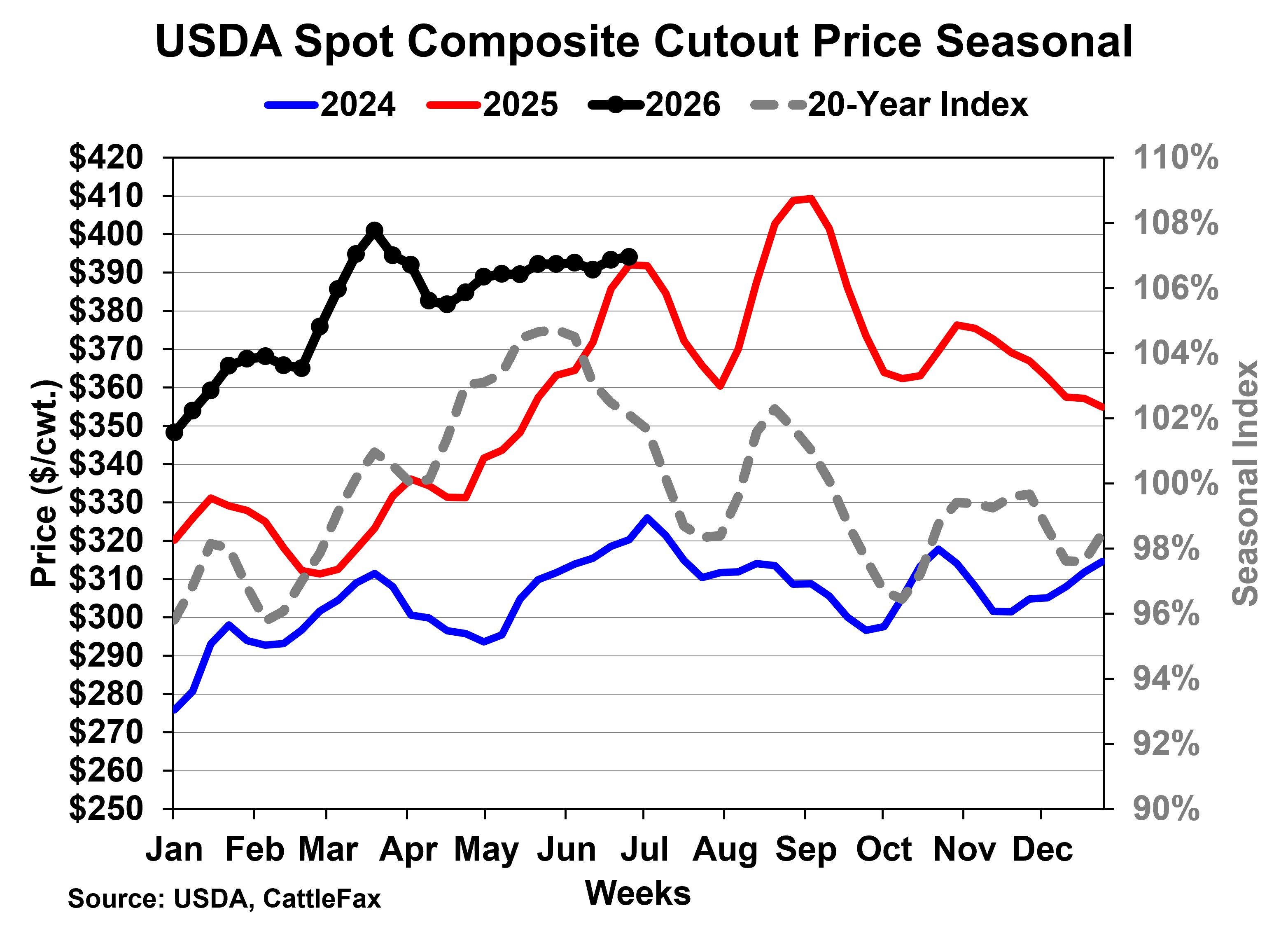
Looking forward, the wholesale beef and fed cattle markets are expected to take on a more seasonal trend through the remainder of the year with prices for both classes softening modestly following the summer peak in demand. While consumer demand remains historically strong, increased price sensitivity has manifested by consumer trade down within the beef complex to cheaper cuts and grinds rather than substituting to competing proteins. Seasonally larger fed cattle supplies will support increased beef production though still at levels below year-ago. The balance of trade is likely to keep per-capita net beef supplies near 59 lbs. on an annualized basis, steady with the past few years.
- CattleFax. Long Term Outlook. December 2025. https://www.cattlefax.com/#!/news-landing/long-term/long-term-outlook---winter-2025
- CattleFax. CattleFax Update. Various report dates. https://www.cattlefax.com/#!/listing-page/update
- United States Department of Agriculture, National Agricultural Statistics Service (USDA NASS). Livestock Slaughter. Various report dates. https://usda.library.cornell.edu/concern/publications/rx913p88g
- United States Department of Agriculture, Agricultural Marketing Service (USDA AMS). Actual Slaughter Under Federal Inspection. Various report dates. https://www.ams.usda.gov/mnreports/ams_3658.pdf
- United States Department of Agriculture, Agricultural Marketing Service (USDA AMS). National Weekly Boxed Beef Cutout And Boxed Beef Cuts - Negotiated Sales. Various report dates. https://www.ams.usda.gov/mnreports/ams_2461.pdf
- United States Department of Agriculture, Agricultural Marketing Service (USDA AMS). Beef, Lamb, and Veal Grading Dashboard. Various report dates. https://publicdashboards.dl.usda.gov/t/MRP_PUB/views/LPMeatGradingDashboard/AMSLPLandingPage?%3Aembed=y&%3Aiid=1&%3AisGuestRedirectFromVizportal=y