New World Screwworm Producer Resources
What cattle producers need to know about New World Screwworm
For additional information, refer to the USDA New World Screwworm Response Playbook and visit Screwworm.gov.
What is New World Screwworm?
- New World Screwworm (NWS) is a devastating pest of livestock and other mammals. Screwworms are a fly larvae, or maggots, that burrow into the flesh of living animals causing serious, and even deadly, damage to the animal.1
- An infestation occurs when screwworm flies are attracted to and lay eggs in an open wound.2
How do I identify New World Screwworm?

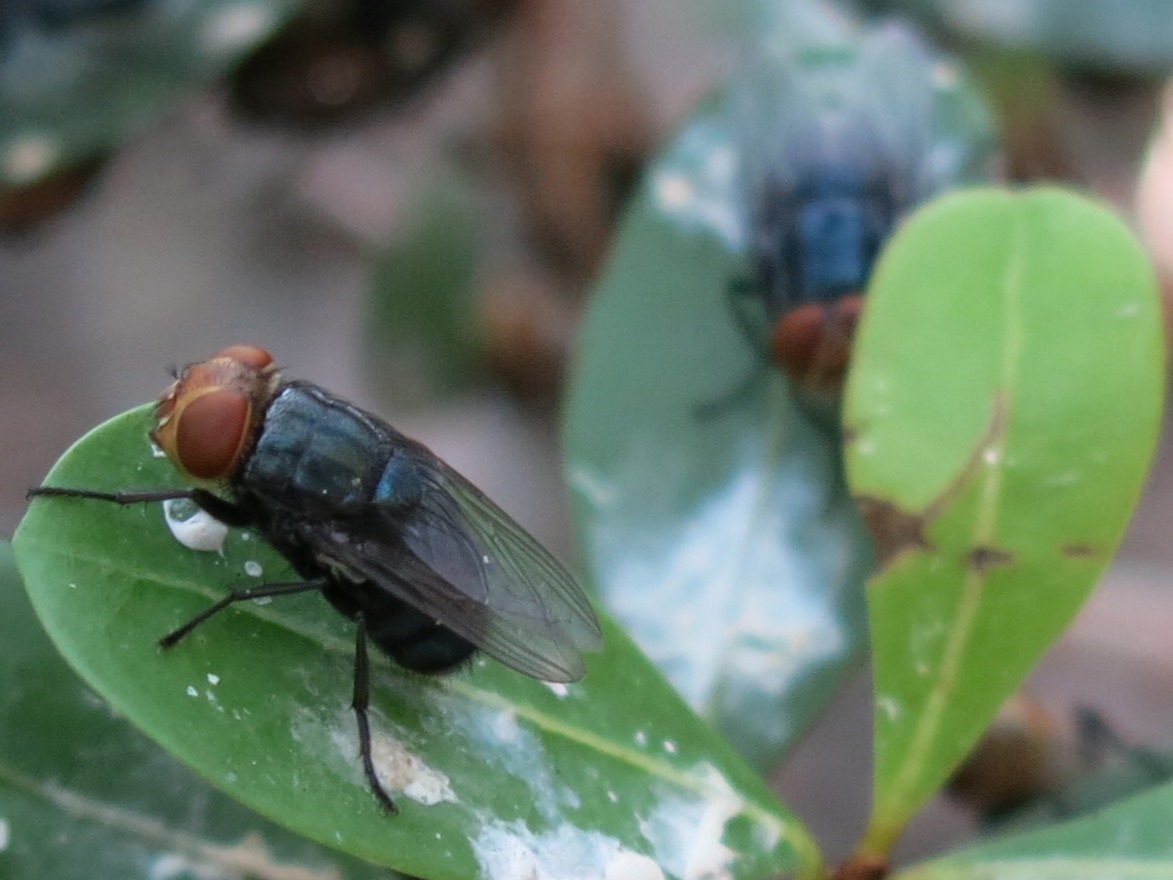
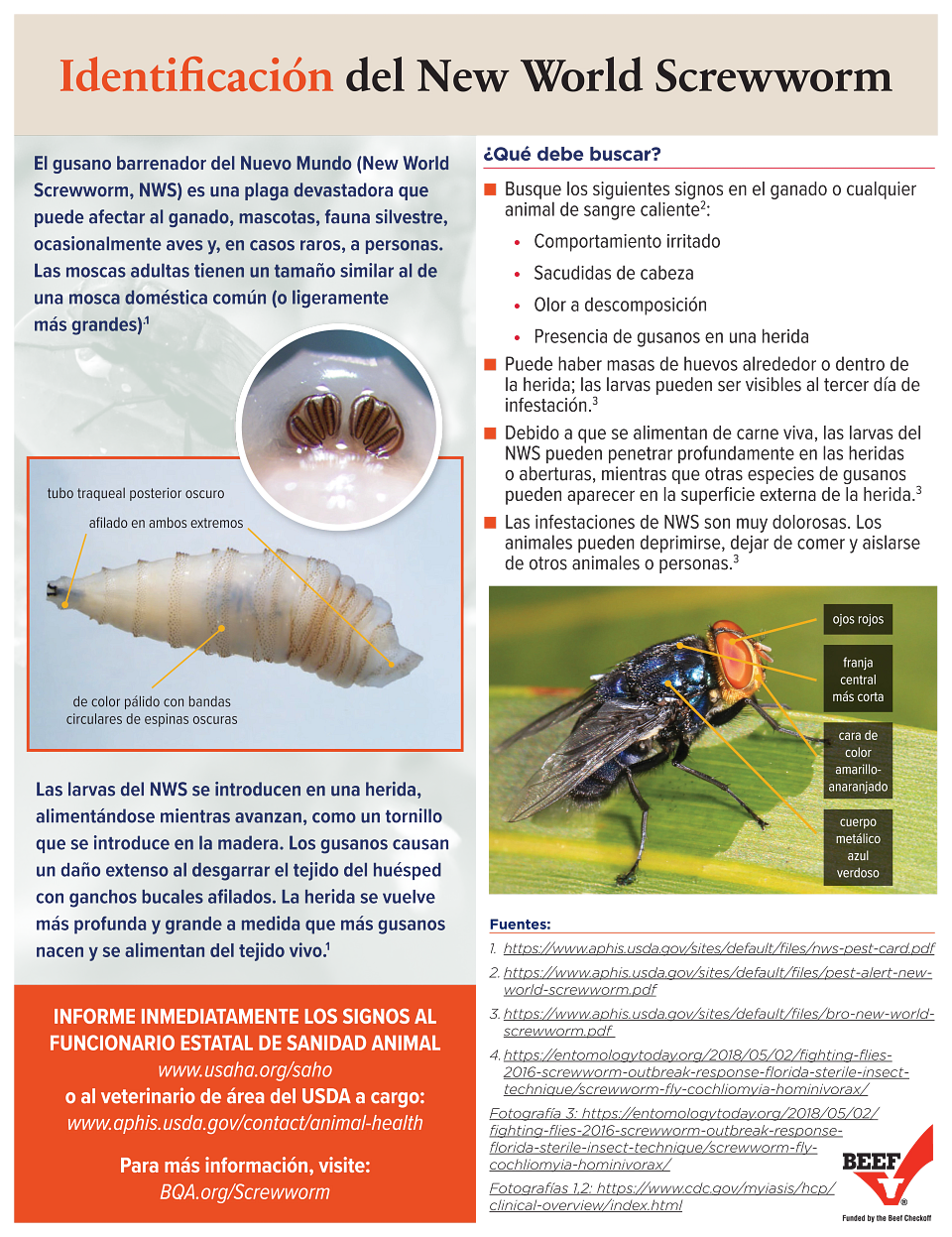
Adult screwworm flies are about the size of a common housefly (or slightly larger).

Screwworm larvae (maggots) burrow into a wound, feeding as they go like a screw driving into wood. The maggots cause extensive damage by tearing at the hosts’ tissue with sharp mouth hooks. The wound becomes deeper and larger as more maggots hatch and feed on living tissue.
What if there is a New World Screwworm infestation in my area?
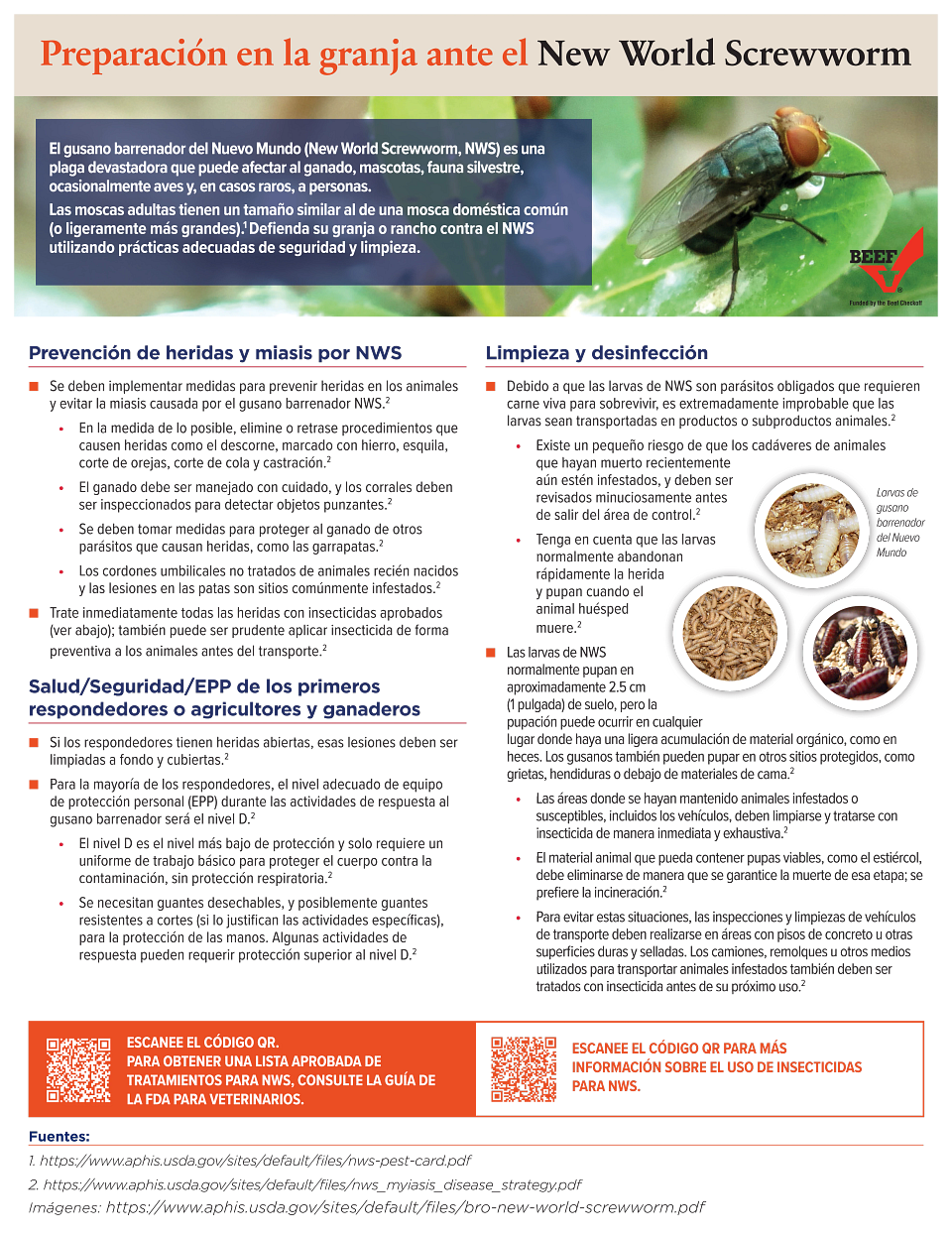
- To the extent possible, eliminate or delay performing wounding procedures such as dehorning, branding, shearing, ear notching, tail docking and castration.3
- Handle livestock with care and regularly inspect livestock facilities and pens for sharp objects.3
- Take measures to protect livestock from other wound-causing parasites, such as ticks.3
- Regularly check livestock for open wounds and myasis. Untreated umbilical cords of newborn animals and foot lesions are commonly infested sites.3
- Follow all state and federal guidance with reporting, movement hold orders and communication. Stay in contact with your local veterinarian and up to date with your state veterinarian’s office.
What to look for?
Look for the following signs in warm-blooded animals (including pets and birds):3
- Irritated behavior
- Head shaking
- The smell of decay
- Presence of maggots in a wound
Egg masses may be around or in the wound; larvae may be visible by the third day of infestation.4 Because they feed on live flesh, NWS maggots may burrow deep into wounds or openings, while other species of maggots may appear around the outer surface of the wound.4
Screwworm infestations are very painful. Animals may become depressed, stop eating and separate themselves from other animals or people.4
What do I do If I suspect an animal has New World Screwworm?
- Immediately report any suspicious wounds, maggots or infestations to a local accredited veterinarian, your State Animal Health Official or U.S. Department of Agriculture (USDA) (www.aphis.usda.gov/contact/animal-health).3,4
- Immediately treat all wounds with approved insecticides. For full treatment recommendations and a list of Environmental Protection Agency registered products against NWS, visit the USDA Animal and Plant Health Inspection Service (APHIS) website.
How do I treat an animal with New World Screwworm?
Contact your veterinarian for guidance immediately. All wounds in animals within a control area should be treated with insecticide every 2 to 3 days until healed to prevent female NWS flies from laying eggs and to kill any eggs or larvae already present.3 All detected myiases must be treated. The recommended protocol for treatment is as follows:3
For more information regarding insecticide use for NWS, visit the Food & Drug Administration (FDA) website:
- Clean the wound and the surrounding tissue with warm water and a mild antiseptic.
- If myiasis is found, physically remove as many larvae as possible.
- Apply an effective topical treatment to kill any remaining larvae.
- Regularly treat affected animals with longer-lasting systemic insecticide.
https://www.fda.gov/animal-veterinary/safety-health/animal-drugs-new-world-screwworm
For an approved list of treatments for NWS, refer to the FDA guidance for veterinarians:
https://www.fda.gov/animal-veterinary/safety-health/new-world-screwworm-information-veterinarians
What do I need to know about health, safety and personal protective equipment?
If responders have open wounds, those injuries should be thoroughly cleansed and covered.3 For most responders, the appropriate level of personal protective equipment during screwworm response efforts will be level D.3
- Level D is the lowest level of protection and requires only a basic work uniform to protect the body against contamination and no respiratory protection.3
- Disposable gloves and possibly cut-resistant gloves (if warranted by specific activities) are needed for hand protection.3
- Some response activities may require the use of protection higher than level D.3
- Use a tarp or other barrier to ensure larvae do not fall on ground, pupate and continue the life cycle.
Cleaning and disinfection
Because NWS larvae are obligate parasites, requiring living flesh to remain viable, it is extremely unlikely that larvae would be transported on animal products or byproducts.3 There is a small risk that carcasses of very recently deceased animals might still be infested, and they should be thoroughly checked before leaving the control area.3
- Be aware that larvae typically and rapidly vacate a wound and pupate when the host animal dies.3
NWS larvae normally pupate in about 1 inch of soil, but pupation can occur anywhere there is a slight buildup of organic material, such as in feces.3 Maggots can also pupate in other protected sites, like cracks and crevices, or below bedding materials.3
- Areas where infested or susceptible animals have been held, including vehicles, must be immediately and thoroughly cleaned and treated with insecticide.3
- Animal material that may contain viable pupae, such as manure, should be disposed of in a manner that will conclusively kill that stage; incineration is preferred.3
To avoid these situations, inspections and cleanings of transport vehicles should be conducted in areas with concrete or otherwise hard and sealed floors.3 Trucks, trailers or other conveyances used to transport infested animals should also be treated with insecticide before further use.3
On-Farm Resources:


Additional Resources:
- Learn more about USDA’s NWS emergency response: Emergency response | NWS | Animal and Plant Health Inspection Service
- Contact your veterinarian right away if you see any suspicious wounds, maggots or infestations in your animals or herd. Animal health professionals report suspected cases to the state animal health official and APHIS Area Veterinarian in Charge. (Source: Screwworm.gov)
- If you see signs of maggot infestations in live or very recently dead wild animals, especially in areas near the U.S./Mexico border, please call 866-4USDA-WS (866-487-3297) to report it to your local USDA Wildlife Services office. (Source: Screwworm.gov)
References
- USDA APHIS. https://www.aphis.usda.gov/livestock-poultry-disease/cattle/ticks/screwworm. Accessed 4/22/25.
- CDC. https://www.cdc.gov/myiasis/about-new-world-screwworm-myiasis/index.html. Accessed 4/22/25.
- USDA APHIS. https://www.aphis.usda.gov/sites/default/files/pest-alert-new-world-screwworm.pdf. Accessed 4/22/25.
- USDA APHIS. https://www.aphis.usda.gov/sites/default/files/bro-new-world-screwworm.pdf. Accessed 4/22/25.